


Does Responsible AI Pay? How Ethics Commitments Build Public Trust with Daniel Schiff, Purdue University
A Joint event brought to you by the Quello Center and the Center for Ethical and Socially Responsible Leadership
Companies are rushing to demonstrate that their AI systems are trustworthy as regulatory (and public) pressure mount. They publish principles, create ethics teams, commission independent audits, and pursue certifications—to manage risk and improve product safety, but also to protect their reputations, encourage adoption, and perhaps forestall regulation. Yet despite the rapid growth of these commitments, we have remarkably little evidence about whether the public actually rewards companies who make ethical commitments. To examine whether responsible AI pays, Dr Schiff draws on 1) interviews with AI auditors and governance professionals across seven countries, 2) survey experiments on corporate AI ethics strategies in the United States and Germany, and 3) a study tracking use of Claude and ChatGPT following contrasting decisions by Anthropic and OpenAI during a Pentagon dispute over military AI safeguards. We already know responsible AI matters in principle. In this talk, he asks if consumers will make AI ethics (commercially) necessary.
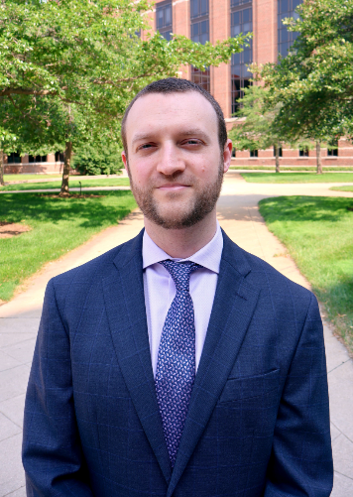 Dr. Daniel S. Schiff is an Associate Professor of Technology Policy at Purdue University’s Department of Political Science and the Co-Director of GRAIL, the Governance and Responsible AI Lab. As a policy scientist with a background in philosophy, he studies the formal and informal governance of AI through policy and industry, as well as AI’s social and ethical implications in domains like education, labor, misinformation, and criminal justice.
Daniel was the founding Responsible AI Lead at JP Morgan Chase & Co., Secretary of the IEEE 7010 standard, the first AI ethics standard. Prior to academia, he worked as Director of Research, Evaluation, and Planning at the Philadelphia Education Fund, supporting college access, dropout prevention, teacher preparation, and fair school funding policy. Daniel studied Philosophy at Princeton University, focusing on robotics and intelligent systems, before completing a Master’s in Social Policy at the University of Pennsylvania and PhD in Public Policy from the Georgia Institute of Technology.
You can see his work in venues such as Policy Studies Journal, American Political Science Review, Management Science, PNAS Nexus, Policy and Internet, Big Data and Society, Science and Public Policy, Public Administration Review, Technology in Society, Machine Intelligence Research, AI & Society, the International Journal of AI in Education, IEEE Transactions on Technology and Society, and the AAAI/ACM Conference on AI, Ethics, and Society. His research and commentary have also been featured in outlets like the New York Times, Washington Post, CNN, TIME, The Atlantic, the Brookings Institution, The Conversation, Tech Policy Press, and MIT Technology Review.