
The Quello Center at Michigan State University
The James H. and Mary B. Quello Center conducts rigorous, interdisciplinary research to inform and elevate public discourse on communication, information, and media policy. Our work critically examines prevailing assumptions about technology, regulation, and their impact on citizens, communities, and society at large.
Driven by a commitment to public interest, the Center seeks to harness the transformative potential of advanced communications while addressing emerging risks and inequalities. We collaborate with key stakeholders to shape policy and practice that promote political, social, and economic progress.
Our current research portfolio includes artificial intelligence governance, social effects of media, rural innovation, broadband policy and digital inclusion, next-generation networks (5G, 6G, LEOs, IoT), and data ethics — all aimed at fostering a more equitable and innovative digital future.
Upcoming Events

The Myth of Algorithmic Justice: Why Rawlsian Frameworks Can’t Fix Our Algorithms with Aaron Schultz
Recent News

MSU study: Pandemic gains in broadband access for rural students are fading
A new study from Michigan State University warns that gains made to address broadband and internet connectivity in Michigan rural communities are beginning to fade.According to MSU research, one in...

Digital Opportunities Compass: Metrics to Monitor, Evaluate, and Guide Broadband and Digital Equity Policy
Reposted from the Benton Institute for Broadband & Society Daily Beat, February 28, 2023 (access original post here). © Benton Institute for Broadband & Society 2023.” The Infrastructure...
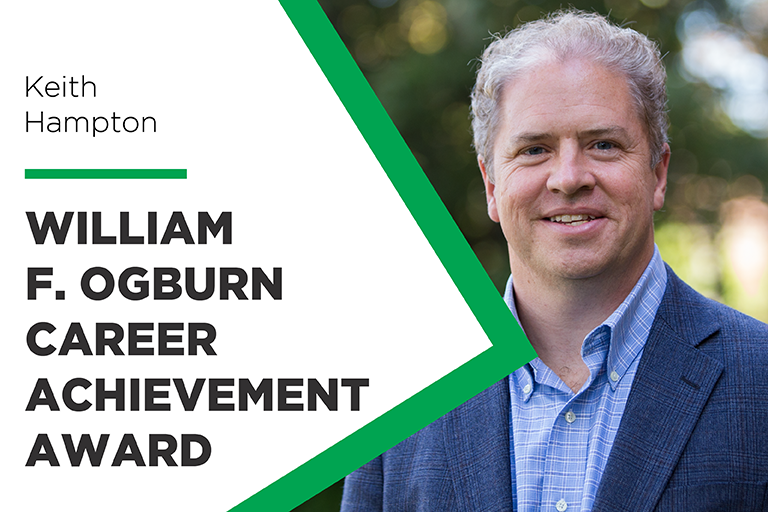
Keith N. Hampton receives the William F. Ogburn Career Achievement Award from the Communication, Information Technologies, and Media Sociology section of the American Sociological Association
Keith N. Hampton receives the William F. Ogburn Career Achievement Award from the Communication, Information Technologies, and Media Sociology section of the American Sociological Association Keith...