

James H. Quello: A Biographical Note by Lauren Lincoln-Chavez

James H. Quello
A Biographical and Historical Note

Compiled by Lauren Lincoln-Chavez for the James Quello Archive

Early Life

James Henry Quello (April 21,1914-January 24, 2010) was born in Larium, Michigan, a northern Italian copper mining colony. In the 1920’s, the Quello family relocated to Detroit, where Quello’s father opened a grocery store in Highland Park, later working for Ford Motor Company as a factory worker and foreman. In a neighborhood dominated by the Klu Klux Klan, James H. Quello experienced discrimination and racial violence due to his Italian-American heritage. He describes his early years as where he “start[ed] becoming a strong believer in self-defense in school and in life.” After prohibition was repealed, the Quello family returned to Larium, opening a thriving saloon across from the police station.
As a college student at Michigan State University, Quello served in the ROTC and pursued journalism with the intention of becoming a newspaperman. He worked multiple positions for MSU’s college newspaper, including columnist and editor, and served as a newscaster on WKAR; a 500-watt college radio station. He graduated with a Bachelors of Art from the College of Arts and Letters in 1935 and was awarded an honorary Doctor of Humanities degree in 1977 from Michigan State University. In 1975, he received an honorary Doctor of Public Service from Northern Michigan University.

WWII (1941-1945)

A World War II hero, James H. Quello served as a Lieutenant and Lieutenant Colonel, earning several commendations for his service. He survived amphibious landings in Africa, Sicily, Italy, and France, and assault crossings on the Rhine and Danube in Germany. In addition to serving as Lieutenant of the infantry, Quello was paid to write articles for service papers. At the summons of Lieutenant Colonel Sandlin, he witnessed the horrors of the Dachau concentration camp before it was deemed off limits. At the end of the war, Quello was assigned to Camp Blanding, Florida, to train an infantry battalion in preparation for Japan.

Broadcasting Career

In July 1945, James H. Quello began his position as Publicity Director for the Lone Ranger and Green Hornet at the WXYZ-AM Detroit station, where he became the personal liaison between Bing Crosby and the ABC radio network. After WXYZ-AM station was purchased by the ABC network Quello took a position as General Manager at WJR-AM, the dominant 50,000-watt clear channel station. Later, he was promoted to Vice President, where his broadcast executive leadership was distinguished by a doubling in WJR (FM)’s power, the implementation of affirmative action policies, and the placement of J.P. McCarthy in a key drive-time spot; where he was the highest rated morning man for 28 years. Under Quello’s leadership, WJR was awarded numerous awards and citations.

During his tenure, WJR implemented affirmative action policies; hiring the first black Disc Jockey, Bill Lane, in 1949. Quello was the architect of “complete range programming,” featuring minority and adult programming. WJR was the only station to feature a 16-piece orchestra and choir training program for high performing high school students, “Make Way for Youth.” Amongst the graduates were prominent black choral members Freda Payne and Ursula Walker. WJR served as the leader in coordinating with national news networks during Detroit’s 1967 rebellion, providing comprehensive local and national coverage. Quello also wrote articles for fourteen community newspapers, titled “Radiograms” by Jim Henry, and was a Detroit stringer for Variety magazine.

James H. Quello had extensive involvement in the Michigan Association of Broadcasting (MAB), where he served as president and government relations chairman. He was appointed by four different Mayors to serve as a member of the Detroit Housing and Urban Renewal Commission for a total of 21 years, where he advocated for open occupancy and low-cost housing for minorities. He also served as a trustee on the Michigan Veterans Trust Fund for 22 years, where he was appointed by four different Governors, and facilitated innovative initiatives. Quello’s broadcasting career provided a practical foundation for his career as an FCC Commissioner and Chairman (1993).

Federal Communications Commission

James H. Quello’s 24-year career as an FCC Commissioner, 1974-1998, was greatly influential, assisting the FCC in ushering in revolutionary technological changes during a global cultural shift in media and communications. His advocacy for communication and broadcasting policies brought new telecommunications options to the American public through the development of cable and satellite TV, high-definition digital broadcasts, and personal communications services. Quello’s regulatory philosophy was guided by a desire to create flexible policies to accommodate quickly changing technologies, as the world began to expand through economic and political initiatives into new territories, technologies, and cultures.
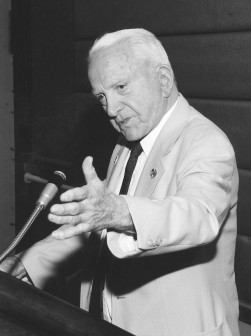
James Quello

James Quello

Known for the longest and shortest confirmation hearing, 8 days and 15 minutes, respectively, James H. Quello was first appointed as an FCC Commissioner in 1974 by President Richard Nixon on the recommendation of the Vice President, Gerald Ford, who built his political career representing Michigan in the House of Representatives until 1973. Despite Quello’s bipartisan support, his appointment was heavily contested by Ralph Nader, who viewed Quello as a pawn of the radio and broadcasting industry. Throughout his career as an FCC Commissioner, James H. Quello advocated for equal opportunity; minority ownership; affirmative action policies; free universal television; and deregulation; taking a strong position against sex and violence in television broadcasting, and financial interest and syndication rules. He heavily pursued the fining of shock-jock Howard Stern for anti-indecency rule violations.
Commissioner Quello was a champion for public broadcasting; committed to free over-the-air broadcasting, deregulation, and limiting violence in television broadcasting. He assisted with the modernization of broadcasting transmission systems, bringing HDTV into the modern age with minimal government oversight. A strong proponent of must-carry rules and retransmission consent, he believed these regulations would be beneficial for broadcasters and viewers. Commissioner Quello served as Chair of the TCAF committee, providing assistance to public broadcasting stations seeking financial stability. In the final year of his career as an FCC Commissioner, James H. Quello worked on the 1996 Communications Act, enabling cross-ownership between telecommunications companies; designed to foster marketplace competition, but which was followed by greater concentration of media ownership.

As a supporter of freedom of speech and First Amendment rights, Commissioner Quello supported the deregulation of commercial limitations in television broadcasting (1981). He adamantly argued against the imposition of three hours of educational programming in children’s television programming, contending that educational programming regulations would impose on First Amendment guarantees of freedom of speech, and quantitative regulations would be difficult to uphold in court. He later reversed his position in 1996, after outraged demands from congressmen and senators.

Affirmative Action

During his career as a Commissioner, the FCC initiated affirmative action policies utilizing rigorous standards of equal opportunity employment to increase minority hiring and ownership in broadcasting. Licensees were required to understand the community they served and make efforts to recruit employees represented in the community. In 1977, the Commission adopted affirmative action policies for the review guidelines for EEO license renewal, requiring an in-depth staff review for stations with six to ten full-time employees and no minority or female employees. In 1980, the Commission tightened the EEO review policy, increasing the standards for equal opportunity employment in the broadcasting industry; imposing sanctions on broadcast stations that did not provide opportunities to minorities.

James H. Quello was a consistent advocate for the review of ownership rules. He was the first FCC commissioner to demonstrate support for minority ownership, advocating for affirmative financing policies in commercial broadcasting station ownership. Commissioner Quello also pushed for distress sales to minorities at 75% of appraisal value versus license revocation and for tax certificates with tax breaks for minorities. Clear Channel Communications was the first network to sell a broadcasting station to minority owners, as they were forced to divest due to ownership limitations imposed by the FCC. Commissioner Quello supported improvements to UHF broadcasting to facilitate the development of local public broadcasting initiatives and minority ownership.

Personal Communication Services

Considered the “Father” of Personal Communication Services (PCS), Quello’s initiative helped spurr the development of the cellular industry. Quello served on a commission, which established the regulatory framework for PCS; developing the band plan and regulatory scheme for private land mobile devices. Quello’s staff advocated for a regulatory framework of the Low Earth Orbiting Satellites (LEOS), that made mobile communications globally feasible. Commissioner Quello ushered in a vision of global communication networks.

Chairman (1993)

In 1993, James H. Quello was appointed Acting Chairman by President Bill Clinton, during which the FCC Commission implemented the Cable Act; imposing rate regulations on cable television broadcasting and lifting long-standing restrictions on television networks from entering the market for reruns and syndication. Congress granted the FCC auction authority, raising over $20 billion for the U.S treasury. Additionally, the FCC cleared the way for new wireless phone and two-way data services, expanding opportunities for personal communications services globally. His tenure as Acting Chairman was lauded as a period of transparency and collaboration.

Michigan State University

In 1998, James H. Quello assisted James Spaniolo, Dean of the College of Communication Arts and Sciences, in the development of the James H. and Mary B. Quello Center for Telecommunication Management and Law at Michigan State University, as a multi-disciplinary center within the Department of Media and Information. The Quello Center’s original mission was to support social research of changing communication technologies, industries, and consumer choices through rigorous interdisciplinary research initiatives, global professional opportunities to facilitate cross-disciplinary dialogues, participation in communication policy developments, and expertise and independent research for public and nonprofit institutions. This mission remains central to the Quello Center moving into the digital age. Quello played a major role in the development of the Quello Center, helping to generate over 200 gifts for the Center through a general endowment that has grown to $5 million by 2017. James H. Quello died on January 24, 2010, at the age of 95, in his home in Alexandria, Virginia.
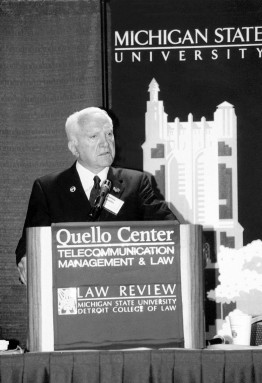
James Quello

James Quello at MSU

Primary takeaways

  • Digital inequality shows larger impacts on youth academic performance as compared to time spent on screens.

  • Digital skills play a significant role in mediating unstructured online engagement (social media use, playing video games, browsing the web) and youth academic, social, and psychosocial development.

  • Unstructured online engagement and face-to-face social interaction are complementary and continuously interact to create and enhance youth capital outcomes.


A familiar story: concerns of screen time

Today’s discussions of adolescent well-being have coalesced around a clear narrative: teenagers spend too much time online, and their academic performance, mental health, and social lives are deteriorating as a result. A steady stream of academic papers, books, and op-eds, alongside a growing number of policy proposals––school phone bans, age-gated social media use, restrictive screen-time limits––rest on the same underlying claim, aligning with a contemporary, digitized version of the displacement hypothesis:

Screen time, particularly the unstructured, free-time spent on social media, gaming, watching video content, or browsing the web, is said to displace the productive face-to-face activities that build adolescents into capable adults.

The implied and often practiced solution is restriction. In response, this dissertation tested this claim directly, and placed it within the broader context of adolescence.

Across three years, I followed 653 Michigan adolescents from early through late adolescence: in grades 8 or 9 (survey one, 2019) to grades 11 or 12 (survey two, 2022). Notably, these students, studied over time, were part of a broader pooled sample of 5,825 students across the same eighteen highschools. The study window captured the year before and the year after the peak of the COVID-19 pandemic and related lockdown orders, functioning as an unprecedented stress test for theories of adolescent social, academic, and digital life and, importantly, as a benchmark to compare the effects of pandemic-related change and inequality to those effects from screen time alone.

Across four studies of adolescents, consisting of six cross-sectional and longitudinal analyses, findings are not consistent with the displacement narrative, nor the broader concerns about the time youth spend on screens.

Findings are, however, consistent with something the current public and (most) academic discussions have largely overlooked or ignored: the gaps and inequalities that determine whether adolescents can access and use the internet meaningfully in the first place.

What the displacement hypothesis overlooks

Displacement and related research and policy concerning the time young people spend online assumes a “zero-sum” model of adolescent day-to-day time. An hour online is an hour not spent studying, reading, sleeping, or interacting face-to-face (i.e., time spent on more productive or developmentally “better” activity).

Indeed, this makes sense logically. However, as an empirical claim, this model requires time spent online to behave differently from all other ways adolescents allocate time; it must produce uniquely negative outcomes and be inherently harmful across digital contexts, rather than the typical mix of trade-offs corresponding to, and often overlooked among any other social or developmental context.

Yet, online time does not differ from other youth activity. Instead, I find it has a mix of pros, cons, and even some “uniquely digital” benefits which youth utilize for social and academic gains. When I compared unstructured digital media use against traditional face-to-face interaction and activities, both produced similar patterns: some negative associations with academic outcomes, some null, and some positive.

Trade-offs within traditional face-to-face activity (for example, social time with friends and family, or time spent in after-school extracurriculars) are treated as ordinary developmental experiences that must be experienced for the betterment of development. The identical trade-offs involving digital time tend to be overlooked or ignored, and online engagement is perceived as altogether harmful.

A growing body of evidence, including this dissertation, do not support that distinction. Indeed, the developmental context is routinely misread, leaving out the context of the experiences and time spent on digital, as well as face-to-face activities, interactions, existing inequalities, and changes inherent to development. As such, I proposed a novel framework to understand these contexts:

Digital capital exchange

Rather than treating screen time as a unified harm, this dissertation advances an exchange”-based framework, grounded in James Coleman’s theories of youth capital and digital inequality scholarship, particularly following Eszter Hargittai, Jan van Dijk, and Alexander van Deursen (see this list of all dissertation references for full works).

The core proposition is that adolescents’ online engagement is not an alternative to developmental activity but another, albiet modern domain through which young people accumulate and mobilize online resources––particularly digital skills––that work alongside existing social networks and experiences to be exchanged for human capital (measured as: academic achievement, aspirations, STEM interest) and social capital (peer networks, community participation, extracurricular involvement).

Online time is not the mechanism; instead, it is digital skills that I find to be the most vital component in youth capital exchange and enhancement. Unstructured online engagement contributes to online skills; those skills, accumulated and mobilized alongside existing peer, family, and community networks, translate into the outcomes researchers and parents care about, i.e., academic achievement, aspirations, and face-to-face interaction and social networks.

This digital capital framework treats online and in-person contexts as complementary rather than antagonistic, and it situates adolescents’ digital lives within the structural conditions––connectivity quality, device reliability, autonomy of use––that determine whether exchange can occur at all.


Methods (in brief)

Paper-and-pencil surveys were administered to students in classrooms at two time-points: spring 2019 (N=2,876) and spring 2022 (N=2,949), across the same eighteen predominantly rural Michigan schools, grades 8–12. Official, nationally-ranked standardized reading, writing, and math test scores (PSAT 8/9, PSAT 10, SAT; College Board) were then anonymously linked to students’ survey responses with the help of participating districts.

Cross-sectional path analyses modeled pooled and wave-specific samples (pooled N=5,825); two-wave cross-lagged panel models tested reciprocal, longitudinal relationships on the 653 students who completed both surveys. Multi-group analyses of the cross-lagged panel models compared relationships between girls (N=345) and boys (N=308). All longitudinal models included time-invariant socioeconomic covariates as well as time-varying covariates to reduce omitted-variable bias.

Key findings: an overview

To summarize, to the best of my ability, eight chapters across 376 pages, I present two primary findings:

First: digital inequality predicted larger and more consistent declines in human capital than screen time did.

Unreliable home internet and technology maintenance problems––experiencing and/or dealing with broken or outdated devices and software, restrictive school-issued hardware, issues with connecting to or maintaining internet access––decreased youth GPA and standardized test achievement. And, these effect sizes were substantially larger than any negative direct effect from unstructured digital media use.

Across all four empirical studies, digital inequality emerged as the most substantial predictor of academic and developmental decline.

Second: digital skills mediated the relationship between online time and adolescent academic and social outcomes.

Unstructured digital media use, particularly online gaming and web browsing, predicted higher internet and social media skills for adolescents, which in turn predicted stronger academic achievement and self-efficacy (human capital), and social interaction and extracurricular participation (social capital). The positive indirect effect of screen time through skills offset or exceeded any small negative direct effects across several outcomes (supporting our existing peer-reviewed work: Hales & Hampton, 2025, and which you can read more about here).

These exchange processes were amplified when peer and family networks were modeled alongside digital skills, consistent with the premise that online and offline contexts operate together rather than in competition. The effect was not universal: social media skills amplified rather than offset a negative association with consistency of interest, one of the two subscales of grit. The exchange framework describes a contextual and conditional, domain-specific mechanism, not a blanket defense of time spent online.

Implications

If digital inequality, and not screen time, is the primary predictor of adolescent academic and developmental decline, and still warrants concern regarding access quality and experience even with the broader adoption of digital devices across the United States, the current policy emphasis on restriction is pointed at the wrong target. The evidence supports a different set of priorities.

Stable, reliable home (fast) broadband should be treated as an educational prerequisite rather than a consumer amenity. Unreliable connectivity exerted larger downward pressure on human capital than any measure of screen time, and that pressure intensified during the pandemic-era reliance on digital infrastructure. Technology maintenance, device repair, replacement, technical support, and the flexibility to install software and explore the web autonomously, matters as much as initial access, and school-issued devices that restrict autonomous use appear to hinder skill accumulation rather than support it.

Restrictive parental mediation of internet use was negatively associated with grit and self-efficacy at magnitudes comparable to the positive contributions of face-to-face activity. This challenges the assumption that digital restriction functions protectively. Instructive mediation, teaching adolescents to verify information, navigate platforms critically, and mobilize online resources toward meaningful ends, is the posture the data supports.

Finally, the technical skill-building that occurs through gaming, self-directed exploration, and deep web use is skill-building, not wasted time. Closing the persistent gender gap in these domains likely requires legitimizing technical play for girls, rather than restricting it for everyone.

None of the above is an argument that screen time is benign. It is an argument that screen time is the wrong focus, particularly when studied mostly in isolation. Context matters substantially, whether that is time spent on other activities during adolescence, the period of adolescence itself, digital inequality, resources gained from such online use, and how all such factors interact. The factor that predicts whether a given adolescent can convert online engagement into capital outcomes is structural: access, infrastructure, skills, and the autonomy to use them. These factors are distributed unevenly, and its uneven distribution, not hours logged, is what separates adolescents who thrive from those who fall behind.

The full dissertation is available through Michigan State University’s ProQuest archive, or see the embedded full-text PDF below. I’m happy to share papers, preprints, or the underlying framework with anyone interested and working in this area––don’t hesitate to reach out via my contact form. Thanks for reading.

James H. Quello: A Biographical Note by Lauren Lincoln-Chavez